New here?
Your first class
Great to have you here! We’re looking forward to meeting you. To make your start with us as smooth as possible, here’s everything you need to know before your first class.
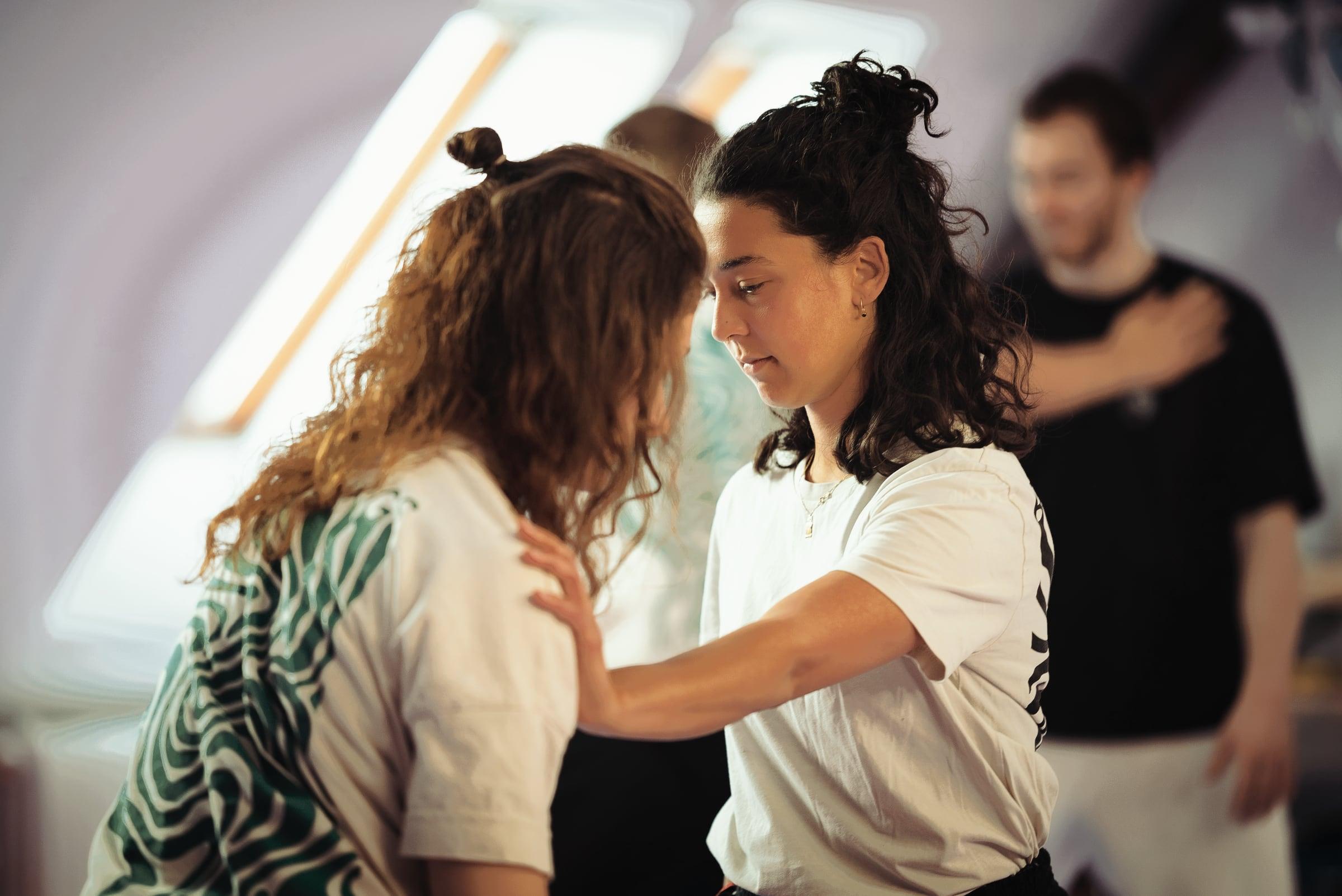
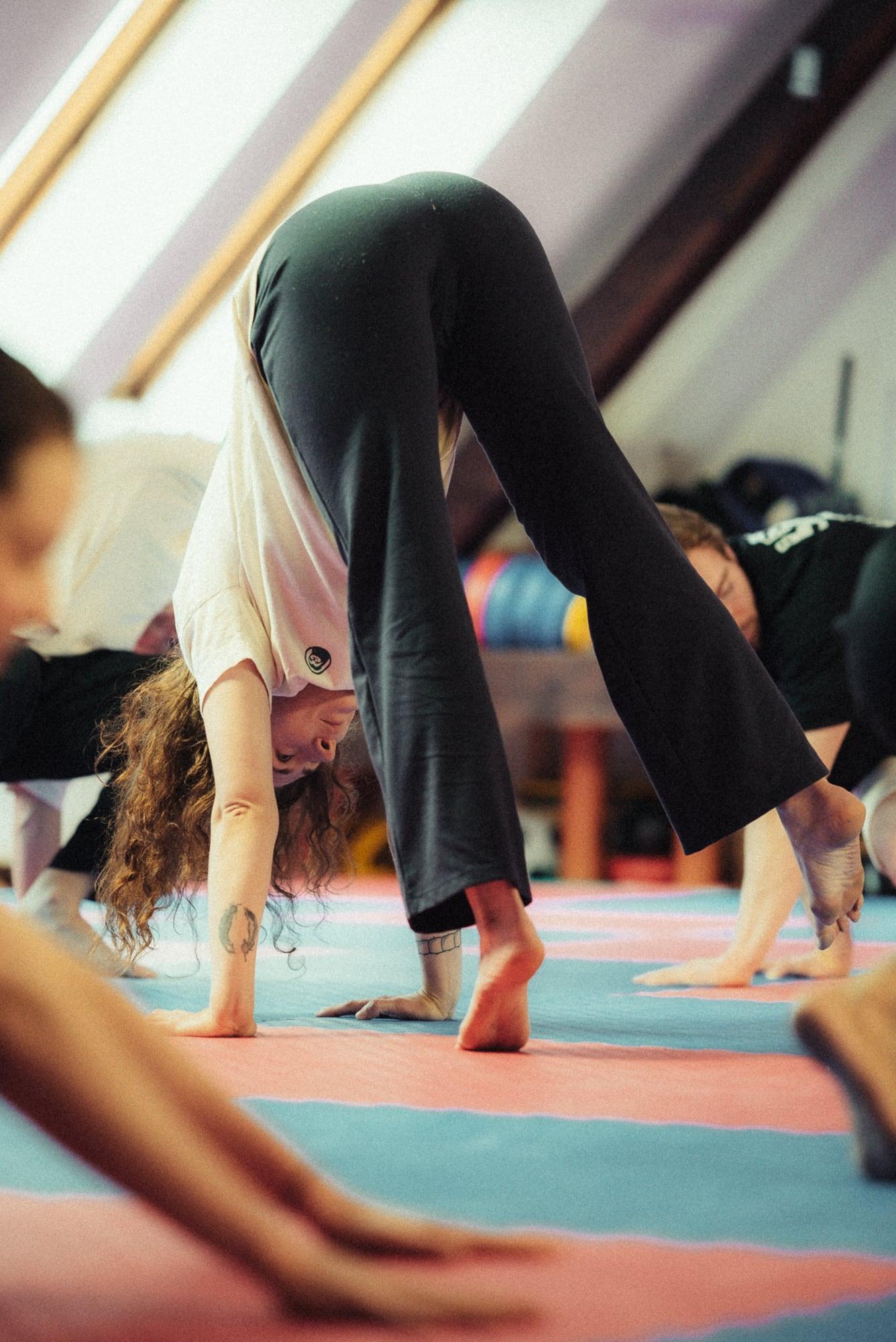
Whether you are a beginner or advanced, we start from where you are. It’s not about being the most impressive one in the room. We learn from each other and help each other out.
How to start your trial class
So you can ease into training, here is what matters for your first visit:
Book your trial class in advance on Eversports. Spots are limited.
- Wear comfortable clothes and bring something to drink
- Let us know beforehand if you have injuries or limitations
- We teach mostly in English, but we can translate into German at any time.
- After your trial class, someone from the team gets in touch with you personally
Are you a professional artist in dance, circus, theatre or music? There is a special rate on the Standard membership for you, with a minimum term of three months.
01
Overthink less
You don’t need to understand exactly how a movement works before you do it. Let your body show you, rather than your head explain it.
02
Curiosity, not expectations
If you already know how it goes, there’s no room for anything new. Best leave your idea of how it should be at home.
03
The wobble is part of it
When something still feels unsteady, you’re at the most interesting point. That’s exactly where your body is looking for a new solution.
04
A hundred first times
Even a movement you’ve done for years can feel different today. If you keep tuning in afresh, you find deeper layers that weren’t there before.
Where we train
How to find us
On Thursday evenings we train somewhere else: at Flow Motion Studio Neukölln, Glasower Straße 60. Open in Google Maps
Our dojo in the Kampfkunstschule Neukölln, Hobrechtstraße 31, is easy to miss:
Come ten minutes early, then we have time to get to know each other. After class there is always a moment for questions too. There are changing rooms and an all-gender toilet, but no shower.
Frequently asked questions
Everything people ask before their first class.
Your first visit
What do I need to be able to do?
Just the wish to move. Many people come to us as complete beginners, and yet almost everyone is much better than the rest at something. The mix is what makes the group. We adapt every exercise to your level, or show you alternatives if you have an injury or another limitation.
Which language do you teach in?
Mostly in English, because we’re often an international mix. If you’re unsure of your English, we’re happy to translate for you along the way. But we show most things directly anyway and do them together. And you get to practise a bit of English on the side. ;)
Are there classes for beginners?
Yes, all our classes are great for getting started. The only class that needs previous experience is Soft Acrobatics Intermediate. You’ll find it on Wednesday evenings in the schedule.
What should I wear?
Comfortable clothes you can move freely in, so nothing tight or heavy. And bring something to drink.
Prices & booking
Can I do a trial class?
Yes. The trial class is one class of your choice at a reduced price. If you want to see more after that, take the two-week trial: 14 days to try all our classes. You find both under Schedule & prices. We look forward to meeting you.
Can I book a trainer for personal training?
Yes, a few of us also train with you one to one. If you want to work on your own practice, we put together a session that fits you. Members get a reduced rate. Write to hey@bewegungskollektiv.de.
What does it cost?
You pay per class or become a member. If you come now and then, you are welcome, and if you come regularly, you pay less with a membership. All prices and options are on the schedule & prices page.
What if I booked but cannot come?
Cancel your booking in Eversports, up to 30 minutes before the class, so your spot is free for someone else. Memberships renew monthly, and you can cancel them online any time in your Eversports membership details.
Training
What happens in a movement class?
A class mixes exercises alone and with a partner, and we explain what each one is for. Many end with open training, where you go deeper into the topic or try your own ideas. Ask us anything, any time: before, during or after class.
How long is a class?
Between 60 and 90 minutes, depending on the class. The exact length is in the schedule.
How often are there classes?
Four days a week, mornings and evenings. The exact times are in the schedule.
Which classes are there?
Six class types, four days a week: Strength & Mobility, Movement Basics, Handstands (beginner), Soft Acrobatics Beginner, Soft Acrobatics Intermediate and Kung Fu Movement. Strength and mobility build the base, acrobatics and handstands add play and balance, kung fu movement brings the internal martial arts. Each class has its own page with what to expect.
Does movement training get me fit?
Fitter, yes, but that is a side effect. What you learn is how strength, mobility, coordination and focus work together.
About us
What is Bewegungskollektiv Berlin?
Bewegungskollektiv Berlin is a group of trainers from acrobatics, strength and mobility, internal martial arts and movement, and the community that trains with them. It is about one thing above all: learning how movement works, from several angles and together with others. Who teaches what is on the About us page.
What is movement training?
Movement training is not one discipline like dance, martial arts or calisthenics. It takes from all of them: jumping, climbing, crawling, balancing, catching, throwing, dancing.
We use exercises and principles from dance, martial arts, yoga, parkour and acrobatics, and we speak one language across them. The more classes you visit, the easier new things become. You learn at your own pace, together with others.
What is movement culture?
Movement culture goes back to Ido Portal, but has since developed in its own right. In his words it contains "the collected knowledge of human movement: breathing, fighting, dancing, sitting, strolling to the supermarket in the morning." There are several documentaries about him if you want to know more. For us it mostly means moving together with others, trying out what is possible with curiosity, spurring each other on, and learning new things instead of only practising what you can already do. That is why open training matters so much to us.
Your question is not here? Write to us